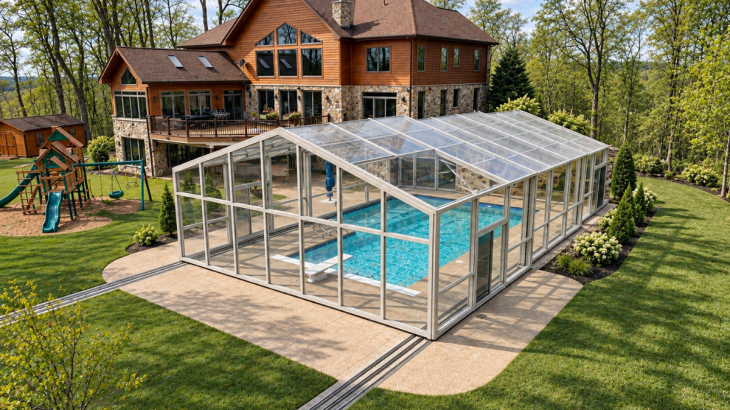
For Canadian homeowners researching indoor pool ideas, the decision often comes down to two options: building a dedicated indoor pool room or transforming an existing outdoor pool into a year-round swimming space with a retractable enclosure.
With Canada’s long winters, unpredictable shoulder seasons and fluctuating temperatures, having access to a swimming pool throughout the year can be particularly appealing. However, a traditional indoor pool requires significant planning, construction and ongoing climate control.
A custom indoor pool room involves considerations such as excavation, structural engineering, insulation, heating, ventilation and dehumidification. For homeowners who already have an outdoor pool, a retractable pool enclosure offers another approach, extending the swimming season without requiring an entirely new indoor pool structure.
Whether you’re planning a new pool installation or looking to make better use of an existing one, these indoor pool ideas explore the design possibilities and practical considerations for Canadian properties.
1. Floor-to-Ceiling Glass, Natural Timber and Stone: Three Indoor Pool Design Ideas
An indoor pool should feel like an extension of your home rather than a separate, purely functional space. Natural materials, thoughtful lighting and architectural glazing can transform a swimming area into a comfortable retreat.
Floor-to-Ceiling Glass for Natural Light
Large glass panels and slim architectural framing create a connection between the pool and the surrounding landscape. This is particularly appealing for Canadian properties with wooded surroundings, waterfront views or landscaped backyards.
Natural light can make an indoor pool feel more spacious while maintaining a visual connection to the outdoors, even during the colder months.
For Canadian construction, glazing should be selected with thermal performance in mind. Energy-efficient windows and properly insulated framing help manage heat loss during winter.
Natural Timber and Stone for a Warm, Organic Look
Wood ceilings, natural stone coping and textured finishes can soften the appearance of an indoor pool room.
These materials introduce warmth and create a more inviting atmosphere, particularly when contrasted with glass, concrete and modern architectural details.
When selecting materials, consider moisture resistance and long-term durability. Indoor pool environments experience elevated humidity, making appropriate finishes and construction materials essential.
Resort-Inspired Lighting and Finishes
Lighting plays an important role in creating a relaxing swimming environment.
Consider recessed lighting, subtle illumination along the pool perimeter and dimmable overhead fixtures. Matte tiles, natural stone and warm architectural finishes can help create a sophisticated resort-inspired atmosphere.
For Canadian homeowners, a well-designed indoor pool can provide a private retreat throughout the winter rather than limiting swimming to the summer months.
2. Small Indoor Pool Ideas: Making the Most of Limited Space
A smaller property doesn’t necessarily mean giving up on an indoor swimming pool.
Compact exercise pools, plunge pools and current-generating swim systems can provide swimming and relaxation opportunities without requiring the footprint of a traditional lap pool.
Here are a few design considerations for smaller indoor pool spaces:
- Use vertical space: Higher ceilings, skylights and larger windows can make a compact pool room feel more open.
- Choose a compact pool design: Exercise pools and swim-in-place systems can accommodate smaller spaces.
- Use continuous flooring: Consistent flooring materials around the pool can create a more cohesive visual appearance.
- Incorporate built-in storage: Recessed shelving and integrated storage help reduce clutter.
- Prioritize ventilation: Even a small indoor pool requires appropriate humidity management and air circulation.
For Canadian homeowners, insulation and heating should also be considered early in the design process. A smaller pool room still needs to maintain comfortable temperatures and protect the building from condensation during colder weather.
3. Retractable Pool Enclosures: An Alternative to Building a Traditional Indoor Pool
One of the most practical indoor pool ideas for Canadian homeowners is transforming an existing outdoor pool with a retractable enclosure.
Rather than constructing an entirely new indoor pool room, homeowners can install a retractable pool enclosure over their existing swimming pool.
These architectural systems feature movable roof and wall sections that allow the enclosure to open during warmer weather and close when temperatures drop.
This creates two swimming environments within the same space:
- Summer: Open the enclosure to enjoy the pool and surrounding outdoor environment.
- Spring and fall: Close the enclosure to provide protection from cooler temperatures, wind and rain.
- Winter: Keep the enclosure closed to create a more sheltered swimming environment, subject to the system’s specifications, heating requirements and local weather conditions.
For Canadian properties, this flexibility is particularly valuable. Instead of having a pool that sits unused for much of the year, homeowners can explore ways to extend their swimming season.
Another advantage is that an enclosure can be installed around an existing pool, potentially avoiding the cost and disruption of constructing an entirely new indoor pool.
Homeowners planning a new build can also explore options to build an indoor pool and incorporate architectural and mechanical requirements into the original design.
4. Managing Humidity, Heating and Ventilation in Canadian Indoor Pools
Climate control is one of the most important considerations when designing an indoor swimming pool in Canada.
Cold outdoor temperatures combined with warm pool water can create significant condensation if humidity and ventilation are not properly managed.
Without appropriate planning, moisture can accumulate on windows, walls, ceilings and structural components, potentially contributing to mould and material deterioration.
A traditional enclosed indoor pool typically requires:
- Dedicated dehumidification: Pool-specific dehumidification equipment helps control moisture generated by the water’s surface.
- Proper insulation: Insulated walls, ceilings and glazing help reduce heat loss during Canadian winters.
- Vapour control: Appropriate vapour barriers and moisture management assemblies protect the building envelope.
- Mechanical ventilation: Properly designed ventilation helps maintain indoor air quality.
- Pool heating: Heating systems maintain comfortable water temperatures throughout the swimming season.
A retractable enclosure introduces another option. When outdoor conditions permit, opening the roof or walls allows natural air exchange and reduces the amount of time the pool environment remains completely sealed.
However, retractable systems should not be considered a complete replacement for climate-control equipment. Winter operation still requires appropriate heating, ventilation and condensation management based on the enclosure design and local climate.
For Canadian homeowners, these considerations are particularly important when planning for heavy snowfall, freezing temperatures and seasonal temperature fluctuations.
5. How Much Does an Indoor Pool Cost in Canada?
The cost of building an indoor swimming pool in Canada depends on several factors, including the size of the pool, construction requirements, materials, mechanical systems and the complexity of the design.
A custom indoor pool project may involve:
- Excavation and structural construction.
- Pool installation and plumbing.
- Insulation and energy-efficient glazing.
- Heating and dehumidification systems.
- Mechanical ventilation.
- Electrical work and lighting.
- Interior finishes, flooring and landscaping.
Canadian construction costs can also vary considerably depending on the province, municipality, contractor availability and local building requirements.
For homeowners who already have an outdoor swimming pool, installing a retractable enclosure may offer a different financial approach.
Because the existing pool shell, plumbing and surrounding deck are already in place, homeowners can avoid several expenses associated with building an entirely new indoor pool.
The final investment will depend on the pool’s dimensions, enclosure design, materials, site conditions and installation requirements.
Before committing to a complete indoor pool construction project, it is worth comparing the costs of a traditional indoor pool with the cost of enclosing an existing outdoor pool.
For a more detailed look at the planning process, explore our complete indoor pool guide.
If you’re considering extending your swimming season, request a quote for a retractable pool enclosure and explore the possibilities for your property.
Frequently Asked Questions About Indoor Pools in Canada
Can you have an indoor swimming pool in Canada?
Yes. Indoor swimming pools are suitable for Canadian properties when designed with appropriate insulation, heating, ventilation and humidity control. Homeowners can also consider retractable pool enclosures as an alternative to traditional indoor pool construction.
Can a retractable pool enclosure be used during Canadian winters?
A retractable pool enclosure can help protect a swimming pool from cold temperatures, wind, rain and other outdoor conditions. However, winter use depends on the enclosure’s structural specifications, snow-load rating, heating requirements and local climate. Homeowners should confirm that their selected system is engineered for their region.
Is it cheaper to enclose an existing pool or build an indoor pool?
Enclosing an existing pool can be less expensive than constructing a completely new indoor pool because the existing pool shell, plumbing and deck can remain in place. The final cost depends on the enclosure, installation requirements and any additional heating or structural work.
How do you prevent condensation in an indoor pool?
Indoor pools require appropriate humidity control, ventilation, insulation and vapour management. Traditional indoor pool rooms generally need dedicated dehumidification equipment. Retractable enclosures can also allow natural air exchange when opened in suitable weather conditions.
How can I extend my swimming season in Canada?
A retractable pool enclosure is one option for extending the swimming season in Canada. By opening during warmer weather and closing during cooler conditions, homeowners can enjoy greater flexibility and protection from changing weather throughout the year.
Do retractable pool enclosures need to be designed for Canadian snow loads?
Yes. Snow accumulation and wind exposure are important structural considerations for Canadian installations. Homeowners should confirm that the enclosure is engineered and rated for the applicable local snow and wind loads, as well as relevant building code requirements.