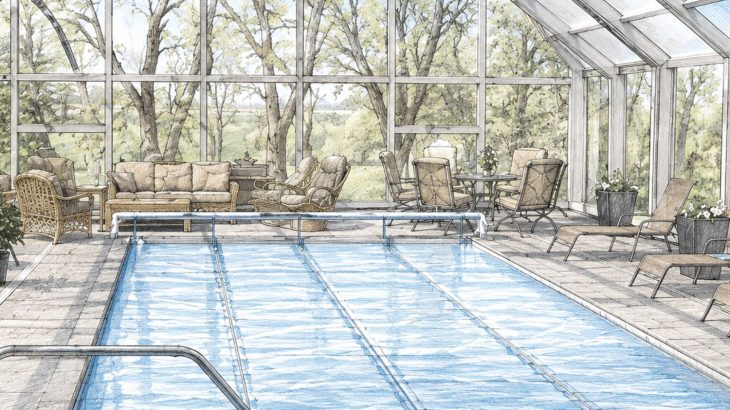
A Pool Enclosure is not just a product you buy off a shelf –
It’s an architectural structure, custom-engineered to your pool dimensions, local climate conditions, and building codes. That’s exactly why pricing varies so widely, and why a straightforward answer to “how much does a pool enclosure cost?” requires more than a single number.
Whether you’re a homeowner looking to extend your swim season by several months or a hotel operator evaluating year-round pool access for guests, understanding enclosure pricing means understanding the engineering, materials, and design decisions behind every project. This guide breaks down the real cost factors for 2026, compares enclosure types and configurations, and helps you set a realistic budget before requesting a custom quote.
Pool enclosures are long-term architectural investments. A well-engineered enclosure from a reputable manufacturer can last 20 to 50+ years, reduce pool maintenance costs significantly, and increase property value. The upfront cost reflects that longevity, not just the aluminum and glass you can see.
If you’re looking for a quick pricing overview, our guide on how much a pool enclosure costs covers the basics. This article goes further, breaking down architectural complexity, retractable system pricing, commercial-grade engineering, and detailed budgeting strategies for 2026 projects.
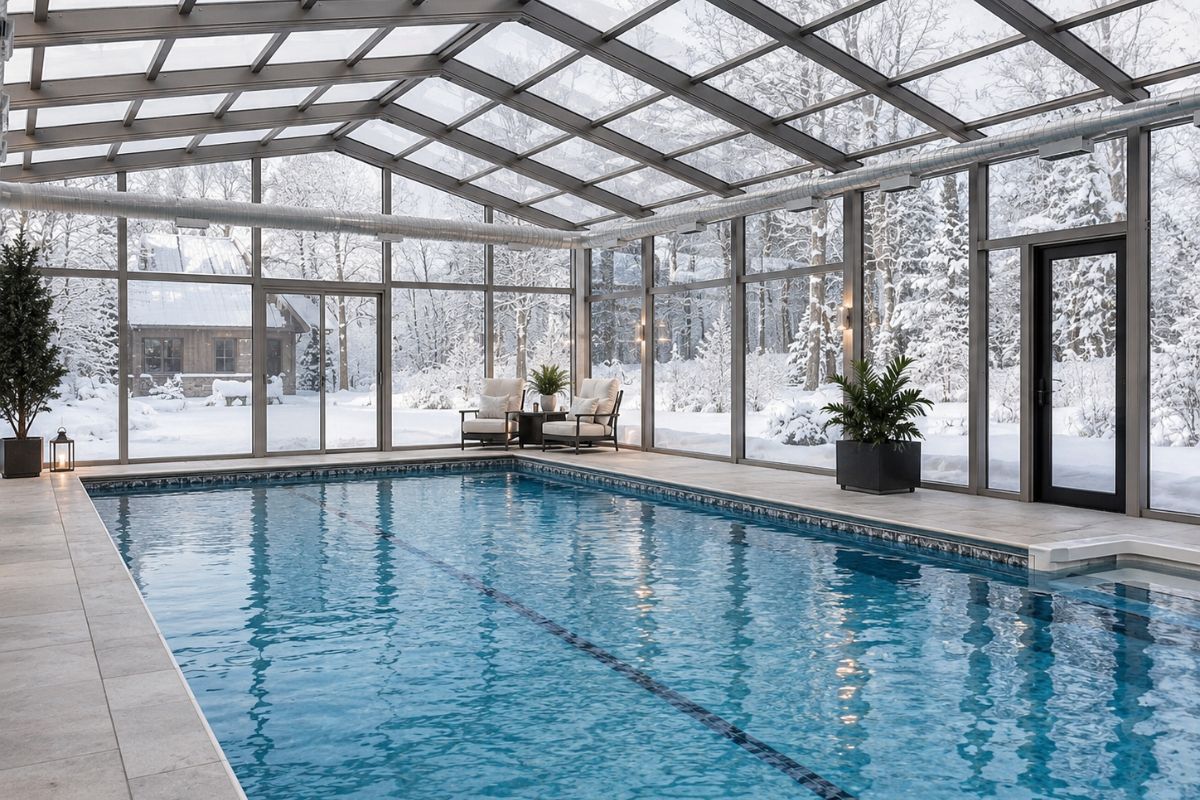
Pool Enclosure Cost Overview: What the Numbers Actually Look Like
Pool enclosure pricing in 2026 ranges roughly from $95 to $138+ per square foot for quality North American-manufactured systems. That range exists because every enclosure is different. A small fixed enclosure over a residential plunge pool and a large retractable system spanning a commercial aquatic facility are entirely different engineering projects, even though both qualify as “pool enclosures.”
Here’s a general framework to orient your expectations:
| Enclosure Category | Typical Price Range (per sq ft) | Typical Total Project Cost |
| Entry-Level Fixed Enclosure (Residential) | $95-115 | $58,000 – $140,000 |
| Mid-Range Retractable Enclosure (Residential) | $105 – $125 | $92,000 – $230,000 |
| Premium Retractable Enclosure (Residential) | $115 – $138+ | $173,000 – $403,000+ |
| Commercial Enclosure (Hotel, Resort, Aquatic Centre) | $95 – $150+ | $230,000 – $1,150,000+ |
These ranges reflect the enclosure structure itself. Additional costs for site preparation, foundation work, permitting, shipping, and installation will apply and should be factored into your total budget.
A note on low-cost imports: You may find enclosure systems marketed at $46–$95 per square foot, typically manufactured overseas. These systems often use thinner framing members, lower-grade glazing, and limited engineering for North American snow and wind loads. They also tend to carry shorter warranties. The per-square-foot savings can be offset by shorter product life, higher maintenance, and potential code compliance issues.
Custom-engineered pool enclosures from established manufacturers like Covers in Play are designed to meet local building codes, withstand your specific climate conditions, and provide decades of reliable performance. The cost difference reflects that engineering depth.
To understand where your project falls in these ranges, request a custom design consultation with accurate pricing based on your specific pool and site conditions.
Factors That Affect Pool Enclosure Pricing
Below are the primary variables that drive pricing up or down. Understanding these factors will help you have a more productive conversation with your enclosure provider and make informed design decisions that align with your budget.
Size and Span
The overall square footage of your enclosure is the single largest cost driver. This includes not just the pool surface area, but also the surrounding deck space you want enclosed and the height clearance required.
Wider spans require heavier structural members to maintain integrity without interior support columns. A 20-foot-wide residential enclosure uses fundamentally different engineering than a 60-foot-wide commercial span. The relationship between width and cost isn’t linear: doubling the span can more than double the structural requirements.
Height matters too. A standard-height enclosure that clears a diving board is less complex than a tall structure designed to accommodate a multi-level deck or water slide feature.
Retractable vs. Fixed Design
This is often the second-largest pricing factor. Fixed enclosures are permanent, non-moving structures. They’re the most cost-effective option and work well for homeowners who want a fully enclosed pool environment year-round.
Retractable pool enclosures use telescoping bays that slide along track systems, allowing you to open part or all of the enclosure when weather permits. This converts your pool between an indoor and outdoor environment with minimal effort.
Retractable systems cost more because they require:
- Precision-machined track systems embedded in concrete or mounted on structural pads
- Telescoping bay engineering so sections nest cleanly inside each other
- Drive mechanisms (manual two-person operation or automated electric systems)
- Additional weatherproofing at bay connection points
Automated retractable systems with electric drive add cost over manual systems, but they offer push-button convenience and eliminate the need for two people to open or close the enclosure. Covers in Play’s patented drive system is engineered for reliability and minimal maintenance over the life of the structure. For a broader look at choosing between enclosure types, see our pool enclosure buying guide.
Glazing Materials
The panels that fill the aluminum frame significantly affect both cost and performance. Each glazing material has distinct advantages:
| Glazing Material | Relative Cost | Key Advantages | Considerations |
| Polycarbonate | Lower | Lightweight, impact-resistant, good insulation | Can yellow over time; less optical clarity |
| Acrylic | Moderate | Better optical clarity than polycarbonate, UV-resistant | More rigid; susceptible to scratching |
| Tempered Glass | Higher | Superior clarity, scratch-resistant, long lifespan | Heavier; requires stronger framing |
| Laminated Glass | Highest | Safety-rated, excellent acoustics, UV filtering | Heaviest option; premium structural requirements |
Glass enclosures look striking and maintain their clarity for decades, but the additional weight requires more substantial framing members, which adds to the structural cost. For retractable systems, heavier glazing also requires more robust drive mechanisms.
Structural Complexity and Profile Design
The architectural profile of your enclosure, its shape when viewed from the end, directly affects engineering complexity and cost.
- Single-peak (gable) designs are the most straightforward and cost-effective structural form.
- Double-peak and triple-peak profiles allow wider spans by distributing loads across multiple peaks, but require more framing members and connection points.
- Asymmetric and custom profiles designed to integrate with existing rooflines or architectural features involve additional engineering and fabrication.
If your pool area has an irregular shape, elevation changes, or existing structures that the enclosure must integrate with, expect additional design and engineering costs.
Climate Engineering: Snow Loads and Wind Resistance
Your location in Canada plays a major role in determining the structural requirements for a pool enclosure. An enclosure installed in southern British Columbia faces very different engineering demands than one in Ontario, Quebec, Alberta, or Atlantic Canada, where heavier snow loads and more extreme winter conditions are common.
Local and provincial building codes establish minimum snow and wind load requirements that every enclosure must meet. In regions with significant snowfall, enclosures require larger aluminium structural profiles, stronger connections, and engineering designed to withstand the weight of accumulated snow, ice, and high winds.
Covers in Play engineers its enclosures without cross-bracing, using structurally preloaded aluminium frames that are designed to handle heavy snow loads and high winds while maintaining clean, unobstructed views. This advanced engineering approach delivers exceptional structural performance without compromising the open, architectural appearance of the enclosure.
Residential vs. Commercial Requirements
Commercial projects typically cost more per square foot than residential ones, not just because of size, but because of code compliance, public safety requirements, and operational demands.
Commercial pool enclosures must meet occupancy-rated structural standards, accessibility requirements, fire code provisions, and often more stringent engineering review processes. The permitting and engineering documentation alone can add meaningful cost to a commercial project.
If you’re planning a commercial enclosure project, connect with our team early in the design process to align enclosure specifications with your facility’s requirements and budget.
Cost by Pool Enclosure Type
Different enclosure configurations serve different needs and budgets. Here’s what to expect across the most common types.
Retractable Pool Enclosure Cost
Retractable enclosures typically range from $105 to $138+ per square foot for residential systems. They’re the most popular option for homeowners who want the flexibility to enjoy both indoor and outdoor swimming depending on the season and weather.
Pricing varies based on the number of telescoping bays, the type of drive system (manual vs. automated), glazing selection, and the total span width. Wider retractable enclosures require heavier-duty track systems and drive mechanisms, which adds to cost.
For a typical residential pool (approximately 16′ x 32′ pool with surrounding deck), a retractable enclosure project might range from $115,000 to $288,000+ depending on configuration and finishes.
Fixed Pool Enclosure Cost
Fixed enclosures are the most cost-effective option, generally ranging from $60 to $90 per square foot. Because they don’t move, they avoid the engineering complexity of track systems, drive mechanisms, and telescoping bay tolerances.
Fixed systems are ideal for homeowners who want year-round indoor pool access without needing the open-air option. They can be enhanced with operable windows, sliding doors, or ventilation panels to allow airflow during warmer months.
Freestanding Pool Enclosure Cost
Freestanding enclosures are independent structures with their own foundation, not connected to your home. They offer the most flexibility in placement and design but require a complete structural system on all sides.
Freestanding systems typically fall in the $80 to $125+ per square foot range. The independent foundation requirement adds site preparation costs, but the design freedom and ability to position the enclosure optimally on your property can be worth the investment.
Attached Pool Enclosure Cost
Attached enclosures connect to an existing building, using one wall of your home or facility as part of the enclosure structure. This can reduce material and engineering costs on the attachment side while creating a smooth transition between your indoor living space and pool area.
Attached systems generally range from $86 to $115+ per square foot, depending on integration complexity. The attachment point requires careful engineering to ensure proper load transfer, waterproofing, and thermal management where the enclosure meets the existing building.
Indoor Pool Enclosure Cost
Creating a true indoor pool environment involves more than just the structure. Indoor pool enclosures must account for humidity management, ventilation, heating efficiency, and condensation control, all of which influence total project cost.
Indoor pool enclosure projects, when factoring in the complete environmental system, typically range from $95 to $150+ per square foot. The enclosure structure itself may fall within standard ranges, but the additional HVAC, dehumidification, and ventilation systems add significantly to the overall budget.
Commercial Pool Enclosure Cost
Commercial pool enclosures for hotels, resorts, aquatic centers, and recreation facilities represent the highest price tier, typically $95 to $150+ per square foot for the enclosure structure alone.
Commercial projects involve larger spans, higher structural loads, more complex code requirements, and often automated retractable systems. Total project costs for commercial enclosures frequently range from $230,000 to well over $1,150,000 depending on facility size and specifications. Hotels and resorts frequently pair pool enclosures with patio and restaurant enclosures to create fully protected outdoor hospitality environments year-round.
The return on investment for commercial operators can be substantial. Hotels and resorts with enclosed pools report occupancy increases during shoulder seasons, and aquatic facilities gain year-round programming capability. We explore this ROI in more detail below.
| Enclosure Type | Price Range (per sq ft) | Best For | Key Cost Driver |
| Retractable | $98 – $138+ | Year-round flexibility | Drive system, bay count, span width |
| Fixed | $95–$105 | Permanent indoor pool | Glazing selection, size |
| Freestanding | $80–$125+ | Flexible placement | Full foundation, all-side framing |
| Attached | $86–$115+ | Home integration | Integration engineering, waterproofing |
| Indoor Environment | $95–$150+ | Full climate control | HVAC, dehumidification, ventilation |
| Commercial | $95–$150+ | Hotels, aquatic centres | Span, code compliance, automation |
Residential vs. Commercial Pool Enclosure Costs: A Direct Comparison
While the same fundamental engineering principles apply to both residential and commercial enclosures, the scale, requirements, and total investment differ considerably.
| Factor | Residential | Commercial |
| Typical Span Width | 15′ – 30′ | 30′ – 80’+ |
| Structural Engineering | Standard residential codes | Occupancy-rated, higher safety factors |
| Permitting Complexity | Moderate | High (plan review, inspections, accessibility) |
| Automation | Optional | Often required for operational efficiency |
| Customization Level | High | Very high (branding, integration, multi-use) |
| HVAC/Ventilation | Basic to moderate | Commercial-grade required |
| Typical Project Cost | $58,000–$405,000+ | $230,000–$1,150,000+ |
| Warranty Expectations | 10 – 20 years | 20+ years structural |
Commercial enclosures demand more from every aspect of the project. Wider clear spans without interior columns, heavier structural loads for public safety, commercial-grade finishes, and often integration with existing building management systems. The engineering documentation package alone, stamped drawings, structural calculations, and code compliance reports, represents a larger investment on commercial projects.
For commercial operators weighing the decision, the relevant question isn’t “what does it cost?” but “what does year-round pool access generate in revenue, member retention, or guest satisfaction?” Covers in Play’s commercial team works with facility owners and operators to evaluate both sides of that equation.
Indoor Pool Enclosure Cost Considerations
Building a true indoor pool environment involves cost layers beyond the enclosure structure itself. Understanding these additional systems is critical for accurate budgeting.
Humidity and Condensation Management
Indoor pools generate significant humidity. Without proper management, moisture will condense on glazing, corrode metal components, and create uncomfortable conditions inside the enclosure. Commercial-grade dehumidification systems for enclosed pools can cost $115,000–$345,000+ depending on pool size and enclosure volume.
Aluminum-framed enclosures hold an advantage here. Unlike wood or steel framing, aluminum doesn’t rust or rot in high-humidity pool environments, which reduces long-term maintenance costs and extends structural lifespan. Steel and wood-framed enclosures often require supplemental HVAC systems specifically to protect the frame itself, adding ongoing operational expense.
Ventilation and Air Quality
Enclosed pools need active ventilation to manage chloramine gases (the chemical compounds that cause the “pool smell” and can irritate eyes and lungs). Proper ventilation systems exchange indoor air without losing excessive heat, and they represent both an upfront cost and an ongoing energy expense.
Retractable enclosures offer a natural ventilation advantage: on mild days, you simply open the enclosure and let fresh air circulate. This can reduce reliance on mechanical ventilation during warmer months and lower operating costs compared to fully fixed indoor pool environments.
Heating Efficiency
Any pool enclosure reduces heating costs compared to an open-air pool. The structure traps solar heat during the day and reduces heat loss from wind and evaporation. Homeowners with enclosures commonly report 30% to 50% reductions in pool heating costs, though exact savings depend on climate, glazing type, and pool usage patterns.
Retractable Roofs for Indoor Pools
One increasingly popular approach is combining indoor pool enclosure walls with a retractable roof system. This gives you full climate control during cold months while allowing the roof to open completely on warm days, venting humidity naturally and creating an open-air feel without sacrificing the structural envelope.
Retractable roof systems add roughly 20% to 35% to the cost of a comparable fixed-roof indoor enclosure, but they can significantly reduce mechanical dehumidification requirements and energy costs over the life of the structure. For homeowners in regions with warm summers and cold winters, this hybrid approach often delivers the best balance of cost, comfort, and flexibility.
ROI and Property Value Impact
Pool enclosures are significant investments. Understanding the return, both financial and practical, helps justify the upfront cost and inform your budget decisions.
Extended Swimming Season
In most of North America, an open-air pool is usable for 3 to 5 months per year. A quality enclosure extends that to 8 to 12 months, depending on your climate and whether you heat the pool. For a homeowner, that means roughly doubling or tripling the usable life of your pool each year. Spread over a 20-year enclosure lifespan, the cost per swim day drops substantially.
Reduced Maintenance Costs
Enclosed pools require significantly less chemical treatment, less frequent cleaning, and less equipment wear. Debris, rain, and organic matter are kept out of the water, which means your filtration system works less, chemicals stay balanced longer, and the pool surface is protected from environmental damage. Commercial operators have reported up to 40% reductions in chemical usage after enclosure installation.
Property Value and Market Appeal
A well-designed pool enclosure increases property value and market appeal. While exact value increase depends on your market, the combination of extended season use, reduced maintenance, and the architectural presence of a quality enclosure makes properties more attractive to buyers who might otherwise see a pool as a liability.
Commercial Revenue Impact
For hotels and resorts, an enclosed pool is a revenue-generating amenity, not just a cost center. Properties with year-round pool access can maintain higher occupancy rates during shoulder seasons and command premium room rates. Aquatic facilities gain the ability to offer year-round programming, swim lessons, and community access that seasonal outdoor pools simply cannot support.
The ROI timeline for commercial pool enclosures varies by market and facility type, but many operators find that the enclosure pays for itself within 5 to 10 years through increased revenue and reduced operating costs.
Budgeting Guide for Pool Enclosures
Smart budgeting for a pool enclosure starts long before you request a quote. Here’s how to approach the financial planning process.
Start with Your Must-Haves
Before contacting an enclosure provider, define your priorities. Is retractability essential, or would a fixed enclosure meet your needs? Do you need full automation, or would a manual system work? Is glass glazing important to you, or would polycarbonate provide adequate performance at lower cost?
These decisions have the biggest impact on your total investment. Clarifying them early helps your provider design a system that fits your budget rather than working backward from a design you can’t afford.
Budget Allocation Framework
A useful rule of thumb for total project budgeting:
| Budget Category | % of Total Project Cost | Notes |
| Enclosure Structure (framing + glazing) | 60% – 70% | The largest single line item; varies by glazing choice |
| Site Preparation and Foundation | 10% – 15% | Concrete piers, pads, or continuous foundation walls |
| Shipping and Logistics | 5% – 10% | Distance from manufacturing facility affects this |
| Professional Installation | 10% – 15% | Typically 1-2 weeks for residential projects |
| Permits and Engineering Documents | 3% – 5% | Stamped drawings, code review, inspections |
| Contingency Reserve | 5% – 10% | For site conditions or design adjustments discovered during construction |
If you’re planning an indoor pool environment, add another 10% to 20% for HVAC, dehumidification, and ventilation systems. This is a separate cost layer that many buyers underestimate during early planning.
Long-Term Maintenance Expectations
Quality pool enclosures require relatively little maintenance. Expect annual costs for:
- Glazing cleaning (1-2 times per year)
- Track lubrication and inspection for retractable systems
- Weather seal inspection and occasional replacement
- Drainage system checks
Annual maintenance costs for most residential enclosures run $200 to $800, far less than the maintenance savings the enclosure generates by protecting your pool. Commercial systems may require slightly higher maintenance budgets, particularly for automated drive systems.
Fixed vs. Retractable: A Budget Decision Framework
If your budget is tight but you want an enclosure, start with a fixed system. You’ll get the core benefits of year-round pool use, reduced maintenance, and energy savings at the lowest cost point. Fixed enclosures with operable windows and doors still provide airflow and ventilation during warm weather.
If budget allows, a retractable system adds genuine lifestyle value. The ability to swim under open sky on a beautiful day and close up before a storm gives you the best of both worlds. Many homeowners who start the process considering a fixed enclosure ultimately choose retractable once they understand the flexibility it provides.
| Consideration | Fixed Enclosure | Retractable Enclosure |
| Upfront Cost | Lower ($95–$115/sq ft) | Higher ($98–$138+/sq ft) |
| Open-Air Swimming | Limited (windows/doors only) | Full open-air capability |
| Maintenance Cost | Minimal | Slightly higher (track/drive upkeep) |
| Mechanical Complexity | None | Moderate (drive system, tracks) |
| Resale Appeal | Strong | Very strong (flexibility attracts buyers) |
| Best For | Year-round indoor pool use | Seasonal flexibility, indoor-outdoor living |
Covers in Play offers a complimentary design consultation. This gives you professional architectural guidance and a realistic cost estimate before you commit to any investment, with no obligation to proceed.
Ready to find out what your project will cost? Request your free custom quote and speak directly with an enclosure design specialist.
Frequently Asked Questions About Pool Enclosure Costs
How much does a pool enclosure cost on average?
Quality pool enclosures manufactured in North America typically range from $95–$138+ per square foot for the structure. Total project costs for residential systems generally fall between $80,000–$405,000+, depending on size, type (fixed or retractable), glazing material, and local climate engineering requirements. Every project is custom, so an accurate estimate requires a site-specific consultation.
What does a retractable pool enclosure cost compared to a fixed enclosure?
Retractable enclosures generally cost 20% to 40% more than a comparable fixed enclosure. The premium covers the engineering for telescoping bays, track systems, and drive mechanisms. Automated retractable systems cost more than manual ones, but they offer push-button operation and eliminate the need for two people to move the bays.
Why do pool enclosure prices vary so much between manufacturers?
The variation comes down to engineering quality, materials, warranty coverage, and manufacturing origin. North American-manufactured enclosures engineered to local building codes with robust aluminum framing and quality glazing cost more than imported systems designed to less stringent standards. The longevity difference, often 20-50+ years vs. 5-10 years, usually justifies the higher upfront investment.
What’s included in a pool enclosure quote?
A complete quote from Covers in Play includes the enclosure structure (framing and glazing), engineering documentation, stamped drawings for permits, and the drive system for retractable models. Site preparation, foundation work, shipping, and installation are typically listed as separate line items so you can see exactly where your investment goes.
How much does a commercial pool enclosure cost?
Commercial pool enclosure costs vary widely based on facility size, structural requirements, and code compliance needs. Projects typically start around $200,000 and can exceed $1,000,000 for large aquatic centers or resort installations. The larger spans, higher safety ratings, and commercial-grade automation systems required for public facilities drive costs above residential levels.
Does a pool enclosure increase property value?
Yes. A well-designed pool enclosure extends the pool’s usable season, reduces maintenance, and adds architectural presence to a property. While exact value increases vary by market, enclosed pools are more attractive to buyers than open-air pools in regions with cold winters or frequent rain, because they convert what some buyers see as a seasonal liability into a year-round asset.
What are the ongoing maintenance costs for a pool enclosure?
Annual maintenance costs for most residential enclosures run $230–$920 This covers periodic glazing cleaning, track lubrication for retractable systems, weather seal inspection, and drainage checks. These costs are typically offset many times over by the maintenance savings on the pool itself, including reduced chemical use, less cleaning, and lower equipment wear.
Is glass or polycarbonate glazing more cost-effective?
Polycarbonate is less expensive upfront and lighter, which can reduce framing costs. However, it can yellow over time and offers less optical clarity than glass. Tempered glass costs more initially and requires heavier framing, but it maintains its clarity for decades, resists scratching, and generally delivers a more premium look. The right choice depends on your budget, aesthetic priorities, and how long you plan to own the property.
How long does a pool enclosure installation take?
Enclosure systems from Covers in Play are prefabricated and shipped in knockdown form. On-site assembly and installation typically takes about one week for a standard residential enclosure, though larger or more complex projects may take longer. The total project timeline from initial consultation to completed installation usually spans several months, accounting for design, engineering, fabrication, permitting, and site preparation.
Can I finance a pool enclosure?
Many homeowners finance pool enclosures through home equity loans, home improvement lines of credit, or renovation mortgages. Commercial operators often use equipment financing or capital improvement budgets. Covers in Play can provide documentation to support financing applications, including detailed project specifications and engineering drawings. Discuss financing considerations during your design consultation.
Do I need a building permit for a pool enclosure?
Yes, in most jurisdictions. Pool enclosures are classified as structures and require building permits, which means stamped engineering drawings and code compliance. Covers in Play provides the engineering documentation and stamped drawings needed for permit applications and works with homeowners throughout the approval process.
How customizable are pool enclosures?
Highly customizable. Covers in Play engineers every enclosure to your specific pool dimensions, site conditions, and design preferences. You can choose the roof profile (single peak, double peak, or multi-peak), glazing type, color of the aluminum framing, retractable or fixed operation, and whether the structure is freestanding or attached to your home. Custom architectural details like integrated gutters, decorative end walls, or curved profiles are also available.
What warranty should I expect on a pool enclosure?
Quality manufacturers offer 10 to 20-year structural warranties. Covers in Play provides a 20-year structural warranty on their enclosure systems, which reflects confidence in the engineering and materials used. Glazing, weather seals, and drive system components may carry separate warranty terms. Always ask for warranty details in writing before signing a contract.